Bumped into a blog post from the folks at Smart Politics regarding the RealtyTrac foreclosure data released for November 2009. I was stunned by their quote that the foreclosure rate is up 56% in Minnesota in the last year. I heavily track foreclosure activity and haven’t seen nor felt that amount of increase. At first I thought it was a mistake on their part but then I started digging and came to a different conclusion completely.
RealtyTrac uses a combination Notices of Default, Notice of Foreclosure (Sheriff) Sale, and REO (bank owned) inventory to create a total number of Foreclosure Filings. I went back and looked at the last 17 months of their data and saw a very dramatic change in their reporting for Notices of Foreclosure Sale data. Take a look for yourself in the chart below:

See the astonishing increase in notices from March 2009 and on? What happened in March that started a trend that has continued for the last 9 months? Honestly, I’m not quite sure. The numbers RealtyTrac is reporting are the notices of the future Sheriff Sale versus the actual sale itself. I and others in the business have noticed that some lenders are postponing sheriff sales multiple times, which can account for some of the increase but we’re talking about an increase of 100% – 500%… far too much to be dismissed so easily. For reference, take a look at HousingLink’s Q3 2009 Foreclosure Report and review the chart below of the number of sheriff sales:
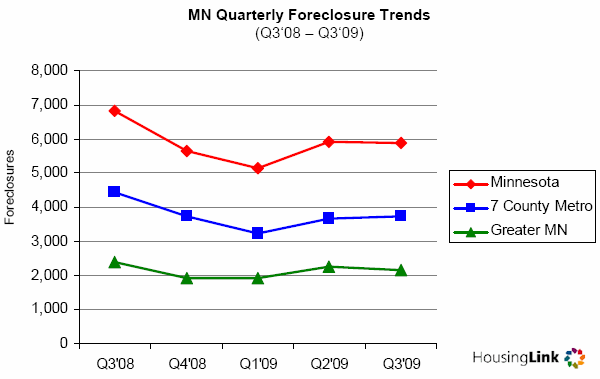
In Q3 & Q4 2008, RealtyTrac counted sheriff sale notices that accounted for 40% of the sheriff sales that HousingLink reported. In Q3 2009, RealtyTrac counted 167% of the number of sheriff sales reported by HousingLink.
The Minnesota Home Ownership Center tracks a different number – the number of pre-foreclosure notices. These notices are sent out when foreclosure proceedings are starting and are often sent 2-5 months prior to the sheriff sale itself.
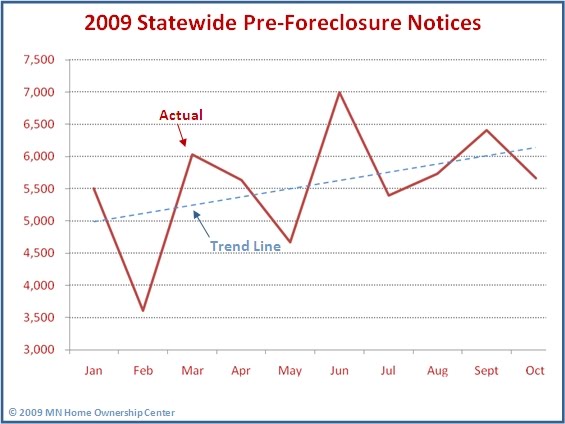
While there is no denying that foreclosure activity is high and that it is likely to remain high for some time to come, I find RealtyTrac’s data very suspect and consequently their analysis on foreclosure rates in Minnesota is suspect as well. Does anyone have an answer?



