Home Buyer Tax Credit Extension Impact

Another day, another tax credit extension proposal.

So the latest idea still includes an $8000 tax credit to 1st time buyers and a $6500 tax credit to repeat buyers that have owned their previous home 5+ years.  While it doesn’t say it in the CNBC article, I have heard from other sources that the proposed extension would expire at the end of April but allow purchase agreements signed before that date to close up to the end of June.

While this is quite different than the proposal that was floating around just a few days ago, by expiring the program at the end of July and the lower amount offered to repeat buyers, it is still a more modest proposal than what several special interest groups were lobbying for until just recently.  That proposal was so ludicrous and expensive that I was actually quite upset that NAR supported it with the MBA and NAHB.

If this bill is passed, I believe many of the following things will happen:

Some Closings will be Delayed
It may sound odd but if the tax credit extension takes effect December 1, many closings scheduled for November may be pushed out a few weeks to December so that the repeat buyer can take advantage of the tax credit too – $6500 can be a strong motivator.

House Prices will Continue to be Artificially Supported
We saw strong support levels for house prices in the 2nd half of this year – which is more likely due to the tax credit than the fundamentals of the market.  We’ll continue to see the house prices artificially supported through the end of the tax credit extension.  This does not mean that prices will instantly drop $8000 after the credit expiration, only that there will be some downward pressure on prices due to the normalization on demand and the lack of artificial incentives.

Tax Credit will Support Housing Through the Slow Winter Months
Historically the housing market is slower & sees price declines in the winter months as demand drops enough that prices drop to meet it.  With the expanded credit in place, we are likely to see less seasonality in our sales prices and units sold over the winter months.

The 1st Time Buyers will be out in Lower Numbers than 2009
Many 1st time buyers that were planning to buy in 2010 bought early due to the tax credit, so some of that demand has been borrowed from the future and our borrowing from the future does have limits (pun intended).

More Houses in the Move-Up Buyer Category will Sell
Many buyers looking to make a move to a more expensive home will find the tax credit gives them a little more help to make that move or will give them the incentive to take the “loss” on their current home to make a “gain” on their new home.  The fact that repeat buyers will excluded from the 2009 tax credit likely helped feed move-up buyers’ negative sentiments about the housing market.

Lower Inventory in the Under $150,000 Price Point will Limit Sales
Since the inventory of 1st time buyer homes has shrunk, some buyers who could not find homes to buy this year will have the same struggle next year.  While more foreclosures are coming in 2010, the demand this year was so strong that inventory next year is still likely to be far more limited than it was last year at this time.

Inventory of Houses for Sale will Continue to Decline
Without increases in employment, wages and home prices, many Americans that might want to move still will not have the financial ability to do so and thus will still not list their house for sale – for many the $6,500 tax credit is simply not enough.  As big as the foreclosure and short sale issue is, it still represents a very small percentage of all homes in the country.

Traditional Sellers will be able to Better Compete with Banks
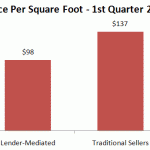
Suddenly sellers that are planning to make a purchase of a new home after they sell their current one will find that they can give up a little more $ on the sell side due to the credit.

The $500,000+ Market will Still be Slow
With Jumbo mortgages still much harder, more restrictive, and more expensive to get than Conventional loans, these homes will see little help from the housing stimulus though the first timer’s move-up’s move-up may spend $500,000+ but they are just as likely to go more lateral than up by buying a home that is a better fit for their lifestyle versus bigger and more expensive.

That concludes today’s crystal ball forecast.  If you have any thoughts on all of this, please comment below!

Traditional, Bank Owned and Short Sales – A Comparison

Most of my buyers are NOT housing experts… they are “regular people” and are experts in whatever field they work in but not in real estate.  That’s just fine because that’s why people like me have jobs doing what we do!  One of the most frequent topics that comes up is the differences between traditional sellers, short sales and bank owned (aka foreclosure or REO) homes.  Below you will find a summary of many of the big differences, which is also available in a PDF one-page format if you’d like to print it.

Traditional Seller

What is it?

Most often Traditional Sellers still occupy the home. The Seller is the home owner and they can afford to sell the property at the price listed in the MLS without approval by a 3rd party. Moving by CHOICE.

Condition of

Property

Usually home is maintained appropriately and may only need minor repairs/cosmetic updates. Utilities are current-water & heat have been kept on.

Disclosures &

Warranties

Seller is required by law to disclose defects in the property. Sellers will be able to educate Buyers on work done to the home & any prior problems/issues; frequency & how issue was resolved. Small claims court or arbitration are legal options Buyers may use to pursue Seller if they feel an issue was not properly disclosed.

City

Inspections

(if required)

Seller will have any city required inspections completed per city code. Often Seller will repair major items found on the inspection prior to listing or will negotiate with the Buyer on responsibility of those repairs. Traditional Sellers are typically the most practical and flexible when it comes to inspection issues.

PA

Response

Timeline

Listing agents can typically get an offer to a Seller & have their response back to the Buyer within hours or a day at most.

Financing

Options

Due to condition, most homes will meet FHA, VA & Conventional appraisal and underwriting guidelines.

Closing

Sellers and Buyers attend closing together and sign all paperwork. Often a bonding moment over the transfer of home to new owners.

After

Closing

Some Sellers & Buyers exchange contact information in case there is a question about how something works in the home. If the Buyer feels there is a problem with the property, they contact their agent who will contact the Sellers agent to try to resolve issue.


Short Sale

What is it?

Seller may or may not occupy property. They are facing a financial hardship (the house may or may not be in foreclosure) and have the home listed for sale at a price less than they can afford to accept.  They are asking their lender(s) to agree to take less than the amount owed on the home as payment in full so they can sell the home.

Condition of

Property

Homes are often in a state of disrepair due to inability to pay for required maintenance/repairs. Homes are often vacant and show signs of distress, wear & tear or lack of care. There are of course short sale properties in “mint condition” but these are the exception.

Disclosures &

Warranties

Seller is required to disclose defects in the property, however may require the Buyer sign an “As-is” Addendum due to the fact they may have vacated the home months ago & are unsure of changes in condition. Disputes after closing may be harder to resolve as seller may have little to no financial assets to seek for damages.

City

Inspections

(if required)

Seller likely does not have funds available to pay for city inspection, so many aren’t done until AFTER a Buyer has had their Purchase Agreement signed by the Bank (which could be months after offer was submitted). Sellers typically require Buyers assume responsibility for those issues & escrow 1.5x the cost of the repair at closing if required by Buyer’s lender or city code.

Purchase

Agreement

Response

Timeline

Listing agent needs to track down Seller, have them sign Purchase Agreement and then get it submitted to Seller’s mortgage company. Can be 3 weeks to 3 months before Seller’s mortgage company responds.

Financing

Options

Current condition may make FHA and VA mortgages harder to get due to tougher condition guidelines but many will still qualify. Conventional normally not a problem.

Closing

Seller will often presign required short sale package from lender & send power of attorney to closing. Closing docs will need to be submitted to mortgage company & deficiency must be signed off on by mortgage company. Sometimes Seller does attend closing.

After

Closing

Sellers are gone-occasionally a delinquent utility bill will surface. Home may still have debris remaining and/or may not have all of the personal property as agreed upon & sometimes appliances go “missing”.


Foreclosed/Bank Owned

What is it?

Vacant home. The prior home owner lost the home through the foreclosure process or gave the keys back to the back in what’s called a “deed in lieu”. Seller is now the bank who filed the foreclosure action. The price listed on the MLS is a price the seller will accept, though it may require additional approvals.

Condition of

Property

Vacant properties-remaining personal property & garbage has been removed. Home is left in last known condition & has been winterized to prevent pipes from freezing/water damage & mold, though some foreclosures are damaged prior to the bank’s possession.

Disclosures &

Warranties

No disclosures/property history available. Buyers must sign “As-is” Addendum as part of Purchase Agreement releasing Seller/Bank from liability on non-disclosed issues. Seller/Bank would have no known prior knowledge of defects since they have not lived in the home-many Banks have not ever seen the property they are selling.

City

Inspections

(if required)

City inspections usually completed as required by city code, however, Buyer is required to assume & escrow for the repairs. Many cities require Buyer to escrow 1.5x the cost of the item at closing.

Purchase

Agreement

Response

Timeline

Listing agents can get offers submitted to banks (during business hours) and Buyer usually gets a response within

24-72 hours.

Financing

Options

Some are in good condition but the majority have some issues that make FHA & VA financing difficult- each property must be evaluated separately.

Closing

Seller/Bank will presign all docs and send them to title company for closing. They will require the final HUD-1 settlement statement to be sent to them 72 hours prior to closing for review-sometimes the Seller takes extra hours or days to sign and closing is delayed.

After

Closing

Home is de-winterized, home may or may not have all of the personal property/appliances as seen at the home prior to closing. Seller’s “As-Is” addendum covers Seller/bank in the event something goes missing prior to closing.


Crystal Ball – Foreclosure Prices Have Bottomed in Twin Cities

Cartoon 1Cartoon 2
For weeks now I’ve been getting the feeling that we’ve turned the corner on prices in foreclosures.  Today I’m ready to go out on a limb and take the position that prices on bank owned inventory has bottomed and in fact is likely to bounce up some over the next few months. These are the reasons why I believe we’ve come to this moment:

Inventory is Falling

Monthly Lender Mediated Inventory - April 2009(image courtesy MAAR)
From February 1, 2009 to April 1, 2009 the inventory of lender mediated (short sale and bank owned) listings has fallen by 1200+ units… a drop of over 13% in just two months. Indications through the first half of April suggest this trend will continue and I’m predicting we’ll be down another 600-700 of these lender-mediated listings once we close out April’s books.  While this data includes both bank owned AND short sales, I think the trend is most prevalent in the bank owned homes… see below.

New Listing Activity Appears to be Peaking

2009 Q1 Listing & Sale Activity(image courtesy MAAR)
Q3 2008, Q4 2008 and Q1 2009 show a peaking of new lender mediated listings coming on the MLS… while no one can say with certainty what will come in the future the fact that this trend has so dramatically broken past trend is a great sign. �Yes the numbers of new listings coming on are still high but the demand is swallowing this new supply faster than it is coming on.

Multiple Offers are the Norm

As recently as January and February it was rare to see multiple offers on many foreclosures but since March 1 the multiple offer has become almost as common as the foreclosures themselves!  Homes are being priced much better by the banks than they have been in the past and with the dramatic drop in interest rates since last year and the HUGE financial incentives for buyers we’re really seeing the fire sale I was discussing a few months ago come into play.

Hennepin & Dakota County Sheriff Sales Well off Peak

Sheriff Sales through March 2009(image courtesy MAAR)
Everyone is talking about a “2nd wave” of foreclosures coming but we’re not seeing any signs of that yet at the local level.  In fact, new Sheriff Sales have been substantially down from their highs for many months.  While the www.orary moratoriums of Fannie Mae and Freddie Mac between Thanksgiving and Valentine’s Day and many other lenders in early 2009 holding their foreclosures until the new housing initiatives came out in March have contributed to the lower numbers in recent months the trend down started before the lenders made those adjustments.  In March 2009 Hennepin County reported 284 Sheriff Sales and only 169 through April 16, 2009, which means we’re on track for approximately 340 sales this month… 1/2 of our monthly peak back in July 2008!  Any future surges in foreclosures should show up in the county data first and will take approximately 6-7 months to show up on the MLS as bank-owned homes.

Months of Supply has Dropped Dramatically

Months Supply(image courtesy MAAR)
The huge increase in demand coupled with the decrease of supply has meant that in the last 12 months we’ve dropped from XX months’ supply to only XX months’ supply.  If trends continue as they have, we should see a further drop for April’s figures and into May before potentially flattening out by July as typical seasonal buyer activity starts to wane.

Lender Mediated Sales Prices Have Fallen Steeply

Lender Mediated Sales Price(image courtesy MAAR)
We’ve seen huge price drops on lender-mediated properties in the last 3 years and that price decrease has brought these homes down to a fundamental value that people clearly recognize and has thus brought many home buyers and investors back into the market after years on the sidelines.

Coming Soon – New Foreclosure & Short Sale Search Options

10 months after the Minneapolis/St. Paul area MLS (RMLS of MN) made available the somewhat-useful-but-really-bastardized-lender-mediated-mls-field and 14 months after I started openly pushing for specific fields, they have now come to see the light and are redoing the fields as three separate and distinct fields that address each of the major questions/problems of lender mediated listings:

Three new required fields will be added to NorthstarMLS. (Tentatively planned for activation Tuesday night–we will let you know if that changes.)

The current “In Foreclosure/Lender Owned?” field will be replaced with two separate fields: “In Foreclosure” and “Lender Owned.”  As with the current combined field, the options will be Yes, No and Not Disclosed.  For current listings, both separate fields will automatically be populated with whatever you have selected for the combined field.  If this is incorrect for either of the separate fields, you will need to edit it in Home Base.

If you have any Saved Searches in Matrix that include the current “In Foreclosure/Lender Owned” field, it will automatically be replaced with the single “In Foreclosure” field.  If you want to add “Lender Owned” to any of your current saved searches, you will need to revise them.

NorthstarMLS continues to define “In Foreclosure” as:  The homeowner being served official notice of foreclosure by a governing entity.

“Short Sale?” is our third new field.  The options here are also Yes, No and Not Disclosed.  Existing listings will have nothing selected for this field.  If you want to make a selection, you will need to go to Home Base and edit the listing.

For NorthstarMLS, we define “Short Sale” as:  A transaction where title transfers; where the sale price is insufficient to pay the total of all liens and costs of the sale; and where the seller does not bring sufficient liquid assets to the closing to cure all deficiencies.

For all three fields, you should have the seller’s signed consent for a disclosure of “Yes.”  You can get this through their signature on the Listing Input Form or on a Change Form.

The new fields will also be available for broker/agent Web sites (through Broker Reciprocity) after a three week notice period for developers.  Therefore, the new fields will be visible to the public.

So based on my math, by mid-May consumers searching public web sites (and agents using our proprietary system) will both be able to clearly identify & separate MOST properties as short sales, bank owned, or traditional sellers.  I say most because “not disclosed” is an option for all three fields.  Many will assume “not disclosed” means Yes but that will not always be the case.

At a time where lender mediated sales are full 1/2 of the sales in our market, any further detail we can use to help us parse the listings is quite welcome.  The differences between foreclosed homes, short sales, and traditional sellers is huge and many buyers have specific wants/needs that dictate their need to focus on only certain types of listings.

The other great benefit is that in the coming months the reporting that MAAR and I have put out will be able to clearly differentiate between the three types of properties and produce statistics on each category of properties.  This could lead to dramatic enchancements to our reports but due to the timing of the system changes we likely will not have sufficient data to make the differentiations until July or August at the earliest.


Equal Housing Opportunity and REALTOR logo

TwinCitiesRealEstateBlog.com is not a Multiple Listing Service MLS, nor does it offer MLS access.
This website is a service of Aaron Dickinson of Edina Realty, a broker Participant of the Regional Multiple Listing Service of Minnesota, Inc.