Foreclosures and Short Sales Don’t Matter to House Prices

While foreclosures and short sales continue to be around 40% of our sales, when looking at housing prices I believe they should be completely ignored.

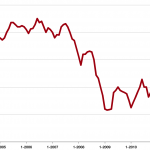
When looking at all Twin Cities housing sales, here is how the Median Sales Price stacks up:

median sales price - all properties - twin cities real estate


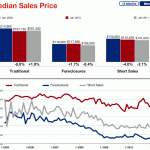
When we split it out to look at Foreclosures, Short Sales and Traditional Sales, we see that Traditional Seller prices have not fallen nearly as much as the composite number suggests:

median sales prices for foreclosures & short sales - twin cities homes


Why we should ignore foreclosure and short sale sales data

If we go back to 2005 and before, the Twin Cities had almost no foreclosures or short sales… something between 1%-2%.  The Traditional Seller market was the market just 6 years ago and once we clear the current housing downturn they will be the market again.

Still, today when Foreclosures and Short Sales account for 2 of every 5 sales, why should we ignore them?  After giving this a lot of thought the answer seems almost obvious now but certainly wasn’t before:  Foreclosures and Short Sales already affect Traditional Sales’ prices.

Today every seller is competing against all other homes on the market, including bank owned and short sale homes.  Each Traditional Seller that successfully sells their home had to go through the pricing and competition gauntlet to secure a buyer at the price and terms of the sale.  While some Traditional Sellers have stronger motivation to sell than others, they don’t have nearly the motivation to sell as a bank.  Whether a foreclosure or a short sale, the bank ultimately determines the sales price and they’re far more motivated to unload properties at whatever price they can get.  This is similar to a wholesale auction versus a retail sale.  One must also take into account that most foreclosures and short sales typically need money for repairs as well, which further decreases their value at time of sale.

So since Traditional Sales already sell at prices that take into account the competition from Foreclosures and Short Sales, by including them in sales price averages we are effectively double-counting the impact from these distressed properties.  Consequently the truest measure of where our housing market was, is and will be is found by looking at the prices that non-distressed sellers are getting in this market.

Traditional Seller Prices Rise, Foreclosure Prices Plummet

You have Zillow, Trulia, Case/Shiller, the National Association of REALTORS and the Minneapolis Area Association of REALTORS and many others all release housing statistics that are then mentioned by local media.

The beauty of today is that we have more information than we have ever had before – the problem with today is that a lot of that information is useless or misleading when talking about an individual house, a block or a neighborhood.  See, housing isn’t just a local thing… it is a hyper-local thing.  I have seen some neighborhoods that have dropped only 10%-20% from the peak pricing and have seen others that have dropped 50% and more – the dynamics involved go beyond what any equation can ever explain.

So now that I’ve just told you that metro-wide statistics are poor correlators of micro markets, I’m going to back up and tell you that you should pay attention to one of them….. that’s just the way I roll!  Below is a chart of Median Sales Prices split by Traditional Sellers, Foreclosures and Short Sales:

What we see here is that prices in the last 12 months have remained relatively stable in traditional and short sales but that foreclosure prices took a substantial drop – something that surprised me since I had predicted foreclosure prices had bottomed nearly 2 years ago.  But up until the last few months my prediction had held quite well!

So what has brought about this sudden and recent drop? Foreclosures for sale have nearly doubled from their levels a year ago, which means that supply is clearly outstripping demand and is almost certainly the reason for the price decline:

Foreclosure, Traditional, Short Sales - Inventory of Homes for Sale


So back to what I was saying before – while this information is worthless for telling you what your house is worth or what a house on your block is worth, it is a good indicator of one of the dynamics currently in play in our market and that does influence pricing across our market.

Minnetonka Home Sales Prices Surge Illusion

Looking at a recent copy of the Minneapolis Area Association of REALTORS’ market update for Minnetonka you will see a stunning figure: Minnetonka’s median home sales price is up an astounding 8% versus last year and the average sales price is still showing a healthy 5% increase over last year as well.  Sounds like prices in Minnetonka are heading up right?  Not so fast….

I am a huge numbers geek and while most of the time averages are a good way to understand an overall trend, in times of great flux they can often mislead you on the true market trend.  I’m going to break down why this is the case in Minnetonka but there are many other examples that could be made of this effect.

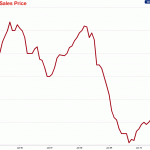
Minnetonka’s median sales price chart is very impressive in how the prices plummeted and then strongly bounced back:

(images courtesy The Thing from MAAR)

What has really changed in the last 12 months is not the prices on Minnetonka homes, but rather the mix of Minnetonka homes for sale that are actually selling:

In the last year substantially fewer homes sold in the lower 1/2 of the home price bracket in Minnetonka than they did the year before, while the upper 1/2 of homes have maintained relatively flat sales activity for the last three years.  Looking further, 2009′s surge of sales in the lower price ranges actually account for a substantial amount of the Minnetonka median sales price decline seen in the chart above!

The lesson here is that averages do not always tell the story right and it is important to look beyond the headline numbers to really understand what is going on in the market.

Twin Cities Home Prices Fall to 5 Year Low

MAAR released figures this week that show the Median Sales Price in the 13-county Twin Cities region fell in February to $195,060… the lowest level since 2003.  Sparked by strong competition and lower demand from buyers, prices have moved sharply lower in just the last few months.

While this news isn’t exciting for sellers, it is a very positive development for buyers in this market (and for sellers planning to buy as well).  With housing affordability now at 5-year highs in the Twin Cities and mortgage rates still very attractive, opportunities exist for buyers to pick from their choice of properties at prices far below their peak just a couple years ago.

Each community and segment of the market is different; with some markets still holding much of their appreciation over the last 5 years and others having lost that much or more so there’s simply no golden rule that Buyers can use when looking at homes but the trend is clear: housing affordability is coming back quickly and dramatically and we haven’t seen opportunities like this for many years.


Equal Housing Opportunity and REALTOR logo

TwinCitiesRealEstateBlog.com is not a Multiple Listing Service MLS, nor does it offer MLS access.
This website is a service of Aaron Dickinson of Edina Realty, a broker Participant of the Regional Multiple Listing Service of Minnesota, Inc.