Minnesota Foreclosures in Q3 2011 Down 32% from Q3 2010

This just in from HousingLink:

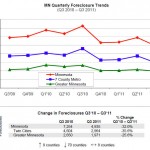
There were 4,935 foreclosures in Minnesota in Q3 of 2011, down 32% from Q3 2010. Q3 2011 marks four consecutive quarters with fewer than 6,000 statewide foreclosures.  While this follows four quarters in which the statewide count exceeded that number, the Q3 2011 figure of 4,935 still far exceeds the 1,618 foreclosures averaged in 2005, the first year sheriff sale records were totaled for the state of Minnesota.

Below is a chart from their very detailed report:

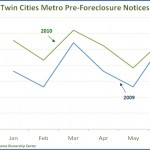
While this in no way means we are out of the foreclosure mess, it is another sign that foreclosure activity continues to run well below the peaks of 2010.  Fewer sheriff sales today means fewer bank owned (REO) homes for sale 6-9 months from now.  Don’t get too optimistic though as the Minnesota Home Ownership Center’s data shows that pre-foreclosure activity did tick up in the most recent quarter.

Foreclosures and Short Sales Don’t Matter to House Prices

While foreclosures and short sales continue to be around 40% of our sales, when looking at housing prices I believe they should be completely ignored.

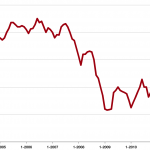
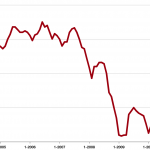
When looking at all Twin Cities housing sales, here is how the Median Sales Price stacks up:

median sales price - all properties - twin cities real estate


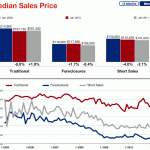
When we split it out to look at Foreclosures, Short Sales and Traditional Sales, we see that Traditional Seller prices have not fallen nearly as much as the composite number suggests:

median sales prices for foreclosures & short sales - twin cities homes


Why we should ignore foreclosure and short sale sales data

If we go back to 2005 and before, the Twin Cities had almost no foreclosures or short sales… something between 1%-2%.  The Traditional Seller market was the market just 6 years ago and once we clear the current housing downturn they will be the market again.

Still, today when Foreclosures and Short Sales account for 2 of every 5 sales, why should we ignore them?  After giving this a lot of thought the answer seems almost obvious now but certainly wasn’t before:  Foreclosures and Short Sales already affect Traditional Sales’ prices.

Today every seller is competing against all other homes on the market, including bank owned and short sale homes.  Each Traditional Seller that successfully sells their home had to go through the pricing and competition gauntlet to secure a buyer at the price and terms of the sale.  While some Traditional Sellers have stronger motivation to sell than others, they don’t have nearly the motivation to sell as a bank.  Whether a foreclosure or a short sale, the bank ultimately determines the sales price and they’re far more motivated to unload properties at whatever price they can get.  This is similar to a wholesale auction versus a retail sale.  One must also take into account that most foreclosures and short sales typically need money for repairs as well, which further decreases their value at time of sale.

So since Traditional Sales already sell at prices that take into account the competition from Foreclosures and Short Sales, by including them in sales price averages we are effectively double-counting the impact from these distressed properties.  Consequently the truest measure of where our housing market was, is and will be is found by looking at the prices that non-distressed sellers are getting in this market.

Fannie Mae Gets Smart, Adds Electronic Lock Boxes to Houses

Fannie Mae, the mortgage giant, will begin requiring electronic lock boxes on their listings. This means that showing agents will use these boxes instead of the current practice of push button lock boxes.

Some may ask, “so what?”  Foreclosure properties are occasionally mistreated by real estate agents – some will or let their buyers pull up carpet and move/destroy things you wouldn’t do in a normal house.  Others will show these homes without permission or go back many times without informing the agent, which is effectively breaking and entering (kinda a bid deal) and will result in an automatic $1000 fine by our MLS.  Sometimes the house is left unlocked or with a bunch of lights still on.  I have heard stories of a million other things that have happened that you’d never imagine in a “traditional listing.”

With electronic boxes, all accesses are logged and any issues with unauthorized entry or concerns about damage can be much more easily addressed when the agent and the seller know who were in the property and when.  Plus, now that agents know they can be held accountable, I would expect fewer issues in the future.

Here is Fannie Mae’s letter regarding the new policy.  Will more lenders smarten up in the coming months? I wouldn’t hold your breath but there’s always a chance!

Traditional Seller Prices Rise, Foreclosure Prices Plummet

You have Zillow, Trulia, Case/Shiller, the National Association of REALTORS and the Minneapolis Area Association of REALTORS and many others all release housing statistics that are then mentioned by local media.

The beauty of today is that we have more information than we have ever had before – the problem with today is that a lot of that information is useless or misleading when talking about an individual house, a block or a neighborhood.  See, housing isn’t just a local thing… it is a hyper-local thing.  I have seen some neighborhoods that have dropped only 10%-20% from the peak pricing and have seen others that have dropped 50% and more – the dynamics involved go beyond what any equation can ever explain.

So now that I’ve just told you that metro-wide statistics are poor correlators of micro markets, I’m going to back up and tell you that you should pay attention to one of them….. that’s just the way I roll!  Below is a chart of Median Sales Prices split by Traditional Sellers, Foreclosures and Short Sales:

What we see here is that prices in the last 12 months have remained relatively stable in traditional and short sales but that foreclosure prices took a substantial drop – something that surprised me since I had predicted foreclosure prices had bottomed nearly 2 years ago.  But up until the last few months my prediction had held quite well!

So what has brought about this sudden and recent drop? Foreclosures for sale have nearly doubled from their levels a year ago, which means that supply is clearly outstripping demand and is almost certainly the reason for the price decline:

Foreclosure, Traditional, Short Sales - Inventory of Homes for Sale


So back to what I was saying before – while this information is worthless for telling you what your house is worth or what a house on your block is worth, it is a good indicator of one of the dynamics currently in play in our market and that does influence pricing across our market.

Equal Housing Opportunity and REALTOR logo

TwinCitiesRealEstateBlog.com is not a Multiple Listing Service MLS, nor does it offer MLS access.
This website is a service of Aaron Dickinson of Edina Realty, a broker Participant of the Regional Multiple Listing Service of Minnesota, Inc.